One of the local organizations, the Rum River Art Center, recently hosted a 100 Day project. The idea behind the 100 Day Project is that you do something creative for 100 days in a row. Someone might make a small painting each day, while another person might write a poem each day.
This project started in mid-January and ended at the end of April. I was so focused on the darkroom last year that I barely did any fiber arts. I missed it. And I knew from my October art retreat that I wanted to play with weaving photos and yarn together. So I decided to make some yarn by spinning for a minimum of 25 minutes a day on my drop spindle.
My History with a Drop Spindle
I started teaching myself to drop spindle in 2021, right before I was diagnosed with breast cancer. I’ve done it on and (mostly) off since then, learning from books (mostly Abby Franquemont’s Respect the Spindle and more recently Priscilla Gibson-Roberts’s Spinning in the Old Way: How (and Why) to Make Your Own Yarn With a High-Whorl Handspindle) and YouTube videos (opens in a new tab and may autoplay).
In 2021, I purchased some fiber in colors I liked. I also subscribed to a fiber-of-the-month club and I picked up some grab bags of mill ends. I used some of the materials straight, but I used a blending board to make rolags with some of the fiber too.
The fiber-of-the-month subscription was great, but it was too much for me as a new spinner. I got a lot of fiber each month and it seemed that they expected most people to spin with a wheel or electric spinner. I was using a drop spindle, so it was very slow.
I found myself turning to the mill ends. I got to try out a variety of fibers in smaller amounts, which was awesome because I got to experiment. The problem was that I sometimes found a mill end I loved, but I had no idea how to find the fiber again.
It worked out well enough though, and as part of my dissertation, I made a circular weaving, Dendro-Oncology (9:30). I spun all of the yarn used in this piece, and I really enjoyed seeing how it came together.
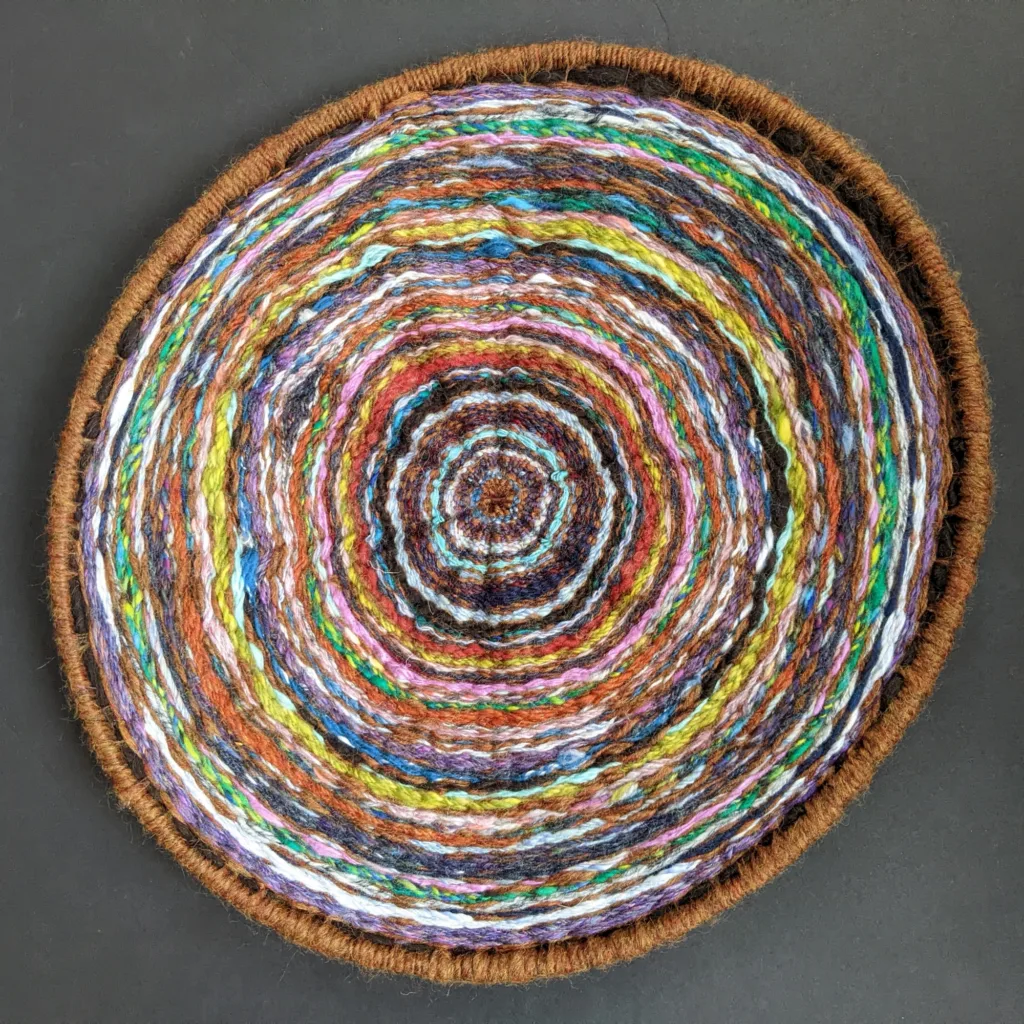
handspun yarn (wool, silk, unknown fibers), crochet cotton, wooden hoops
What I Did and What I Learned from the 100 Days Project
I haven’t really spun much since then, in part because I’d been so focused on 209 Weeks that I hadn’t made time for fiber/textile arts. I thought spinning a little bit each improve my spinning skills and bring more balance in my artistic practice.
I was mostly successful. I missed two or three days of spinning, which I tacked on at the end. I got better at figuring out my own workflow (predrafting is good) and I became more comfortable and fluid with my spinning.
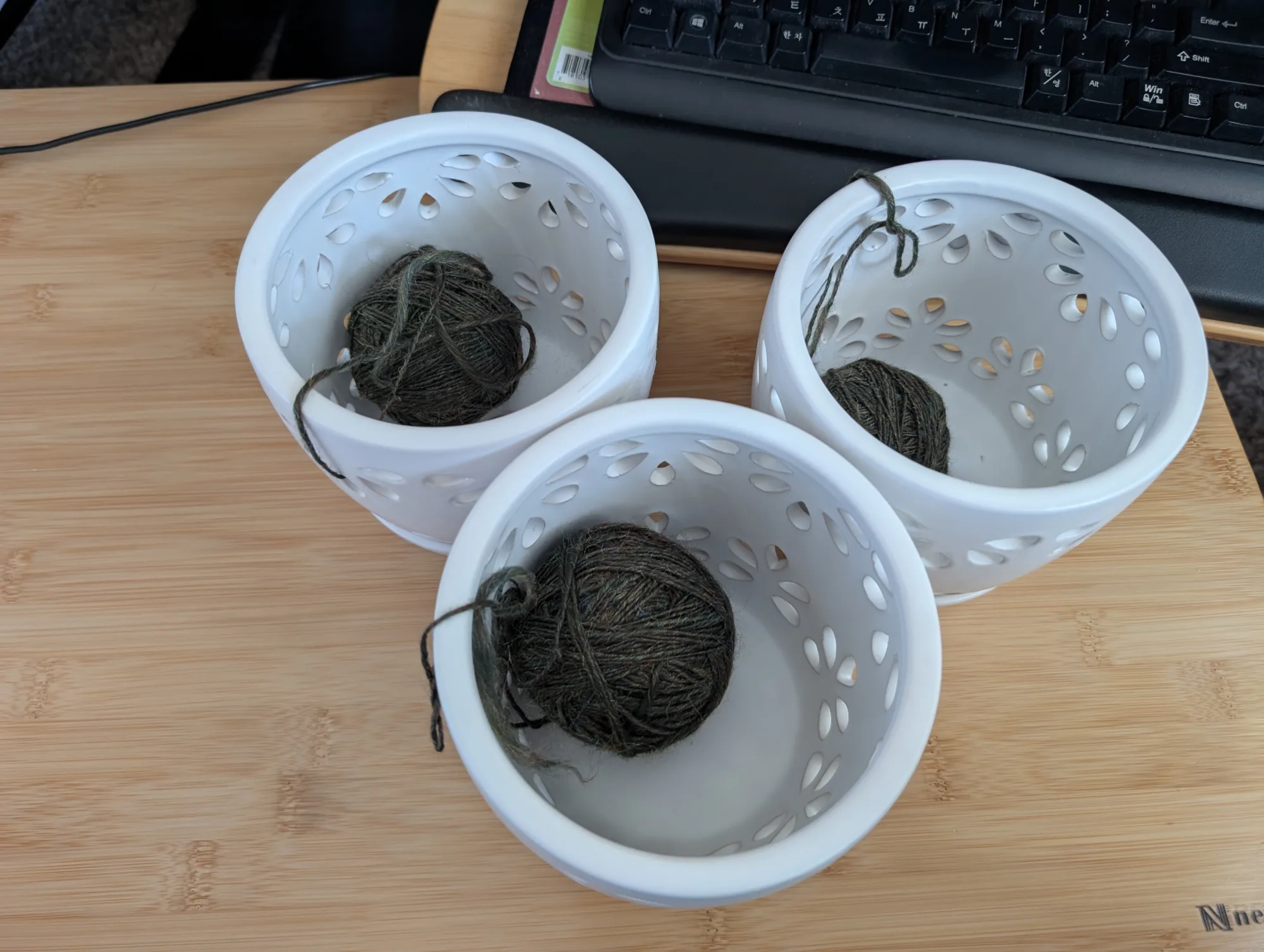
I was interested in spinning larger amounts of yarn, or at least yarn that goes fairly well together. So I focused on making yarn in shades of green and blue. And I made yarn! I ended up with about 430 yards of yarn.
I’m glad I made the yarn. But I hated the 100 Day Project aspect of it.
Before I start something new, I read a lot (possibly too much). I’m always interested in how other people experience things. I devoured blog posts about the 100 Day Project and listened to the podcast about it (link opens in a new tab and may autoplay). I really enjoyed reading about other people’s wins, and I wholly expected to have a bunch of wins of my own.
But that’s not what happened. I’ve been thinking for a while about why it didn’t work, and here’s what I’ve figured out so far.
1) A process-based goal was a bad idea.
I am a fan of process- and time-based goals vs outcome-based and time-bound goals.
Of course, deadlines are a thing. Submitting art, submitting a dissertation, some things need to be time-bound.
But while I was writing my dissertation, I realized that I could not properly estimate how long things would take. So if I made my weekly goal “finish chapter 4,” I couldn’t know that I’d succeed at that. When I didn’t, I’d get discouraged. If my goal was “write for a half an hour, three days this week” (which was my immediate goal post-radiation treatment), I could know meeting that goal was within my control.
When it came to this 100 Days project, I decided to do a time based goal. I thought it would work well, and I didn’t want another outcome-based project since the 209 Weeks project already has built-in, ongoing outcomes.
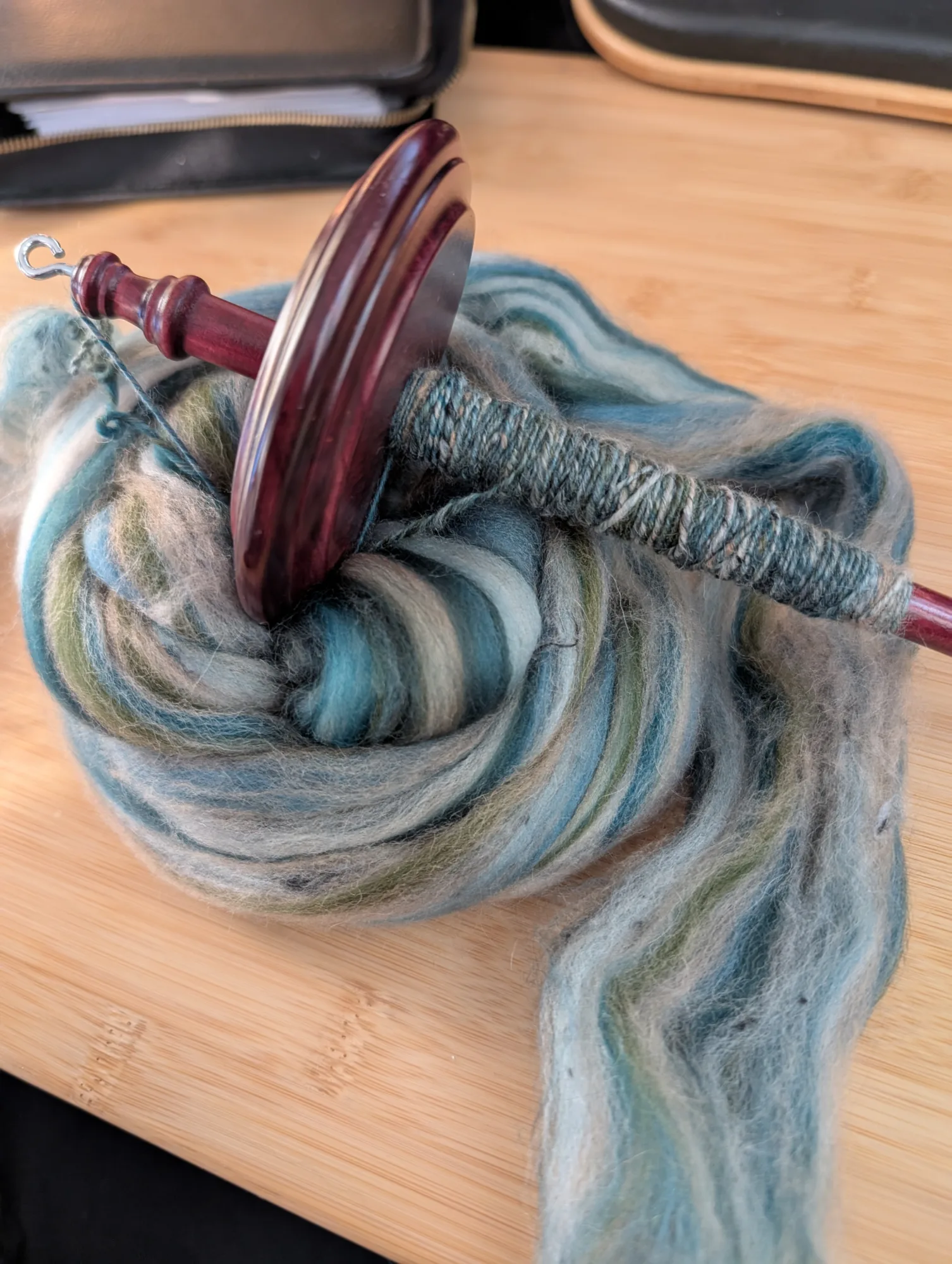
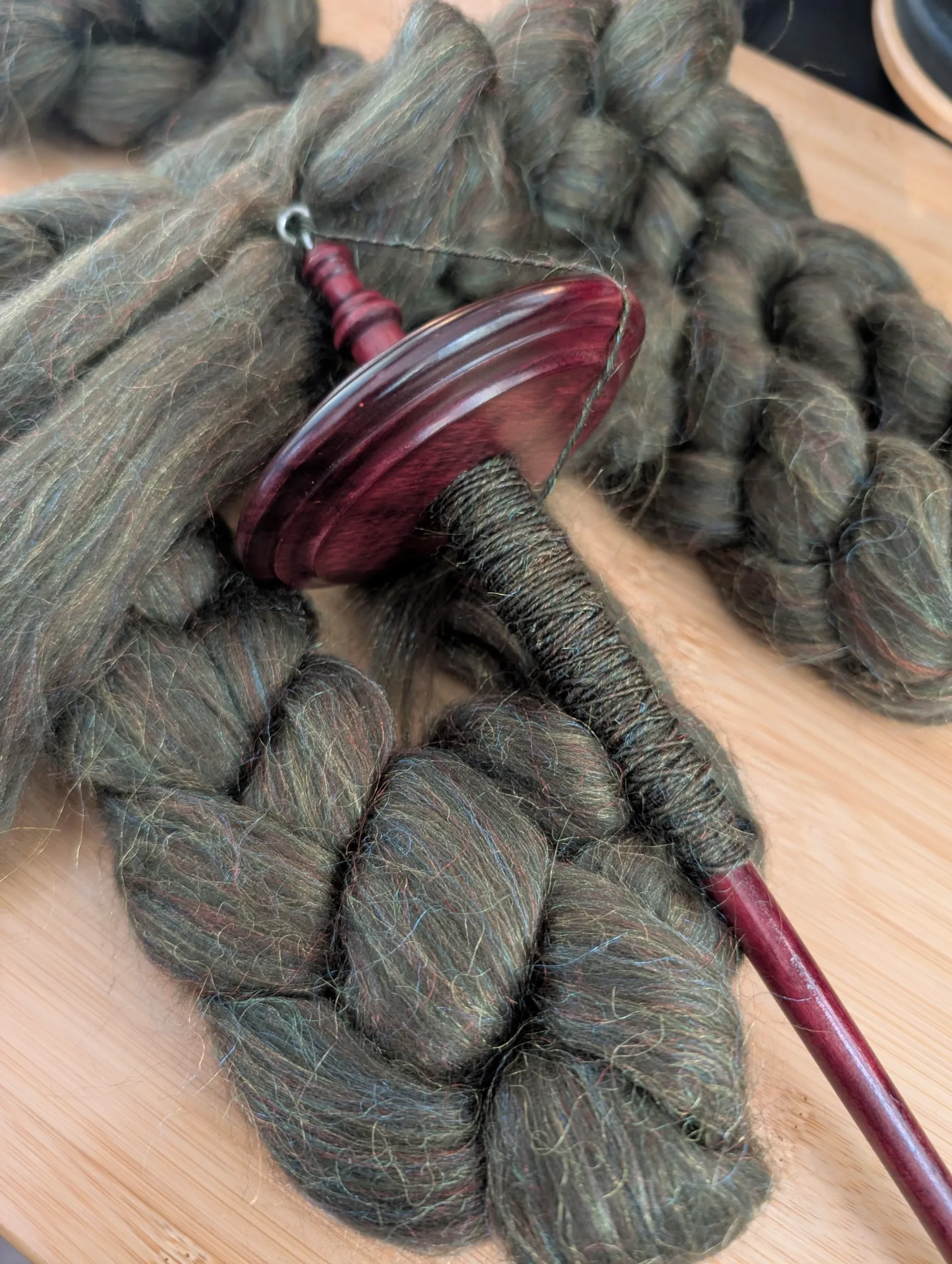
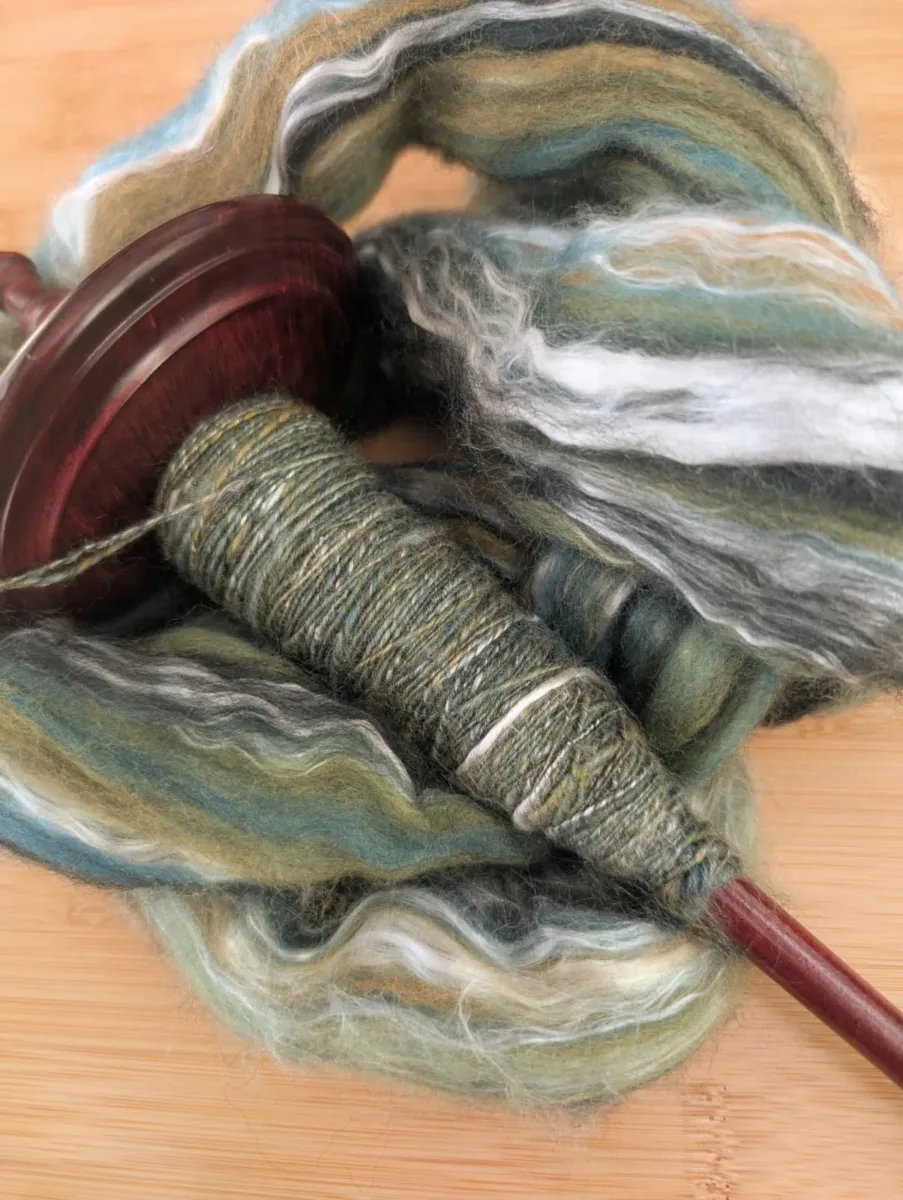
2) A process-based goal might have worked if…
…I could see some clear progress each day!
I don’t have Instagram, so I’ve never worried about my work being “Instagrammable.” I make my work and document some steps to share with friends along the way and that’s it.
But part of the 100 Day Project is sharing work with others to show daily progress. The Rumriver Art Center set up a private Facebook group, which I enjoyed being a part of.
But spinning—especially slow, drop spindle spinning—doesn’t show much work from day to day, so I didn’t want to post a photo of my progress every single day. That was fine, but it also made me feel like I wasn’t participating as well as I could have been.
Instagram and Facebook groups aside, I think it would have been encouraging to me if I could clearly see success from day to day. I knew I was making progress, but it was so hard to see.
3) I resented not getting a single day off from making.
In my second year of my PhD program, when it was nonstop reading and note taking, my mom convinced me I had to give myself one day off a week. I argued it wasn’t possible, but decided to try her advice. I gave myself Saturdays off. And with rare exceptions (usually right around the end of the semester), I stuck to it.
And Mom was right. I did need that work-free day. Having one set day off made me able to say “yes” to fun and “no” to work without any guilt. And to my surprise, I found that I was better at getting work done during the week, because I knew I had to get it done so I could take Saturday off. Often, I got everything done and had the whole weekend to myself.
I kept this up for years, and even started taking tech breaks on Saturdays. My weekends felt three days long.
I fell out of this habit a long time ago, but there’s usually one day per week where I don’t end up making art. During the 100 Day Project, I found myself spinning really late on Sunday nights, and I was angry about it.
4) If I were to try this again…
I would seek this out if I wanted to practice a completely new skill or medium. If I wanted to learn watercolor, or paint, or make blackout poetry. Something where I could see clear growth from day one to day one hundred.
No matter what medium or technique I was focused on, I would pick something small—something that I could see daily change with.
I might do this while working on another series, but I wouldn’t do this while already having a quick turnover project (in this instance, the 209 Weeks project with its weekly postcards).
And, I would give myself a day off! I don’t know if I’d just build that in or extend the 100 Days, but I would consciously give myself a day off, rules be damned.
Will I ever do this again? Eh… Right now I think I’m good with my daily walking practice and my daily morning pages practice. A daily artistic practice is not what I need in my life right now. Still, I hope someone else might learn from my experience and my mistakes!
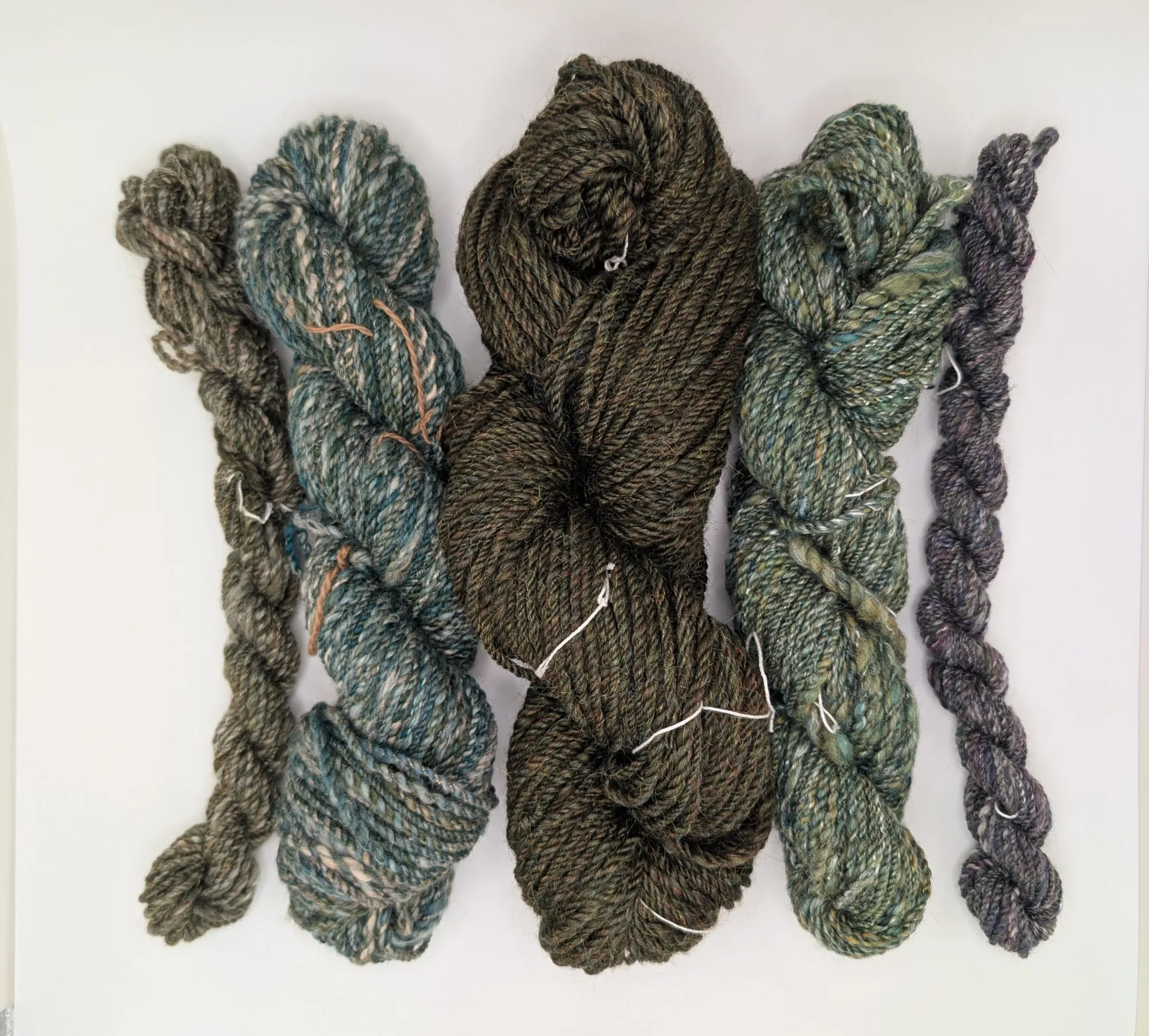
Small green hank: wool, nylon, silk, unknown fibers, ~55 yards of 2-ply yarn
Medium blue hank: wool, camel, ~100 yards of 2-ply yarn
Olive green hank: wool, nylon, ~120 yards of 3-ply yarn
Medium green hank: wool, silk, ~100 yards of 2-ply yarn
Small purple hank: wool, silk, unknown fibers, ~55 yards of 2-ply yarn
Leave a Reply