It’s been ten years since I started my doctoral program and three years since I finished it.
In April my friend/colleague/mentor, Jehanne, invited me to speak with the Narrative Inquiry class at the U. She said she was especially interested in having me talk about identity and the writing/creative choices I made for my dissertation.
At first, I thought these two things were unrelated. But as I started brainstorming what I wanted to talk about, I realized how many of my dissertation writing decisions came down to my identities as an artist and a writer.
This was a surprise to me, because when I started my doctoral program, I really worked to keep my fiction-writer, textile artist, and photographer selves separate from my academic self. I knew I’d “do” academic writing in my own way. But I didn’t see how I could bring my whole creative self to my research.
Honoring a Creative Self While Deep in Coursework
While I was stuck deep in coursework and academic reading, I started taking some classes at the Loft Literary Center. I was seeking out examples of good writing (and good reading) as a counterweight to the academic work I was reading.
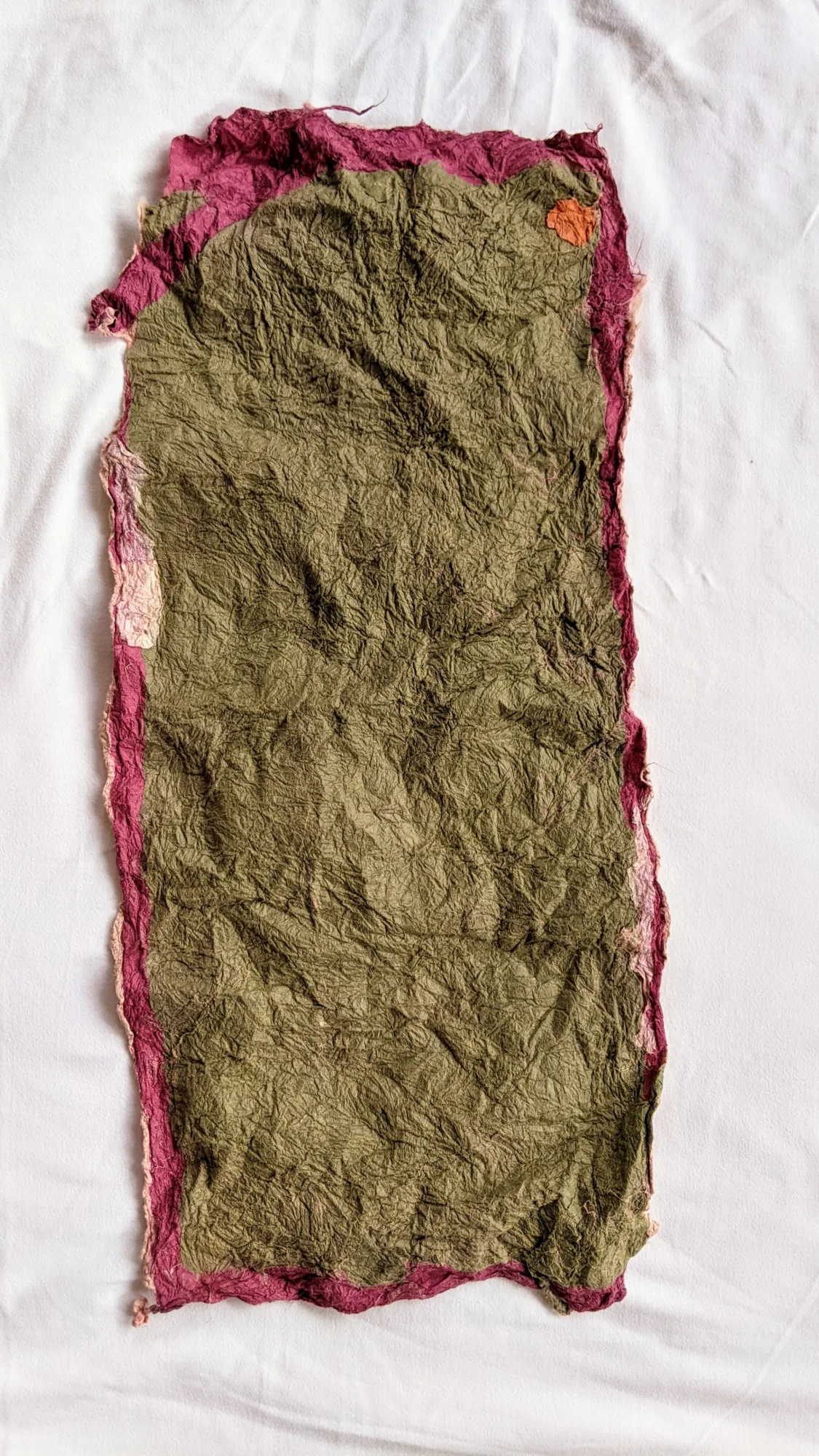
I also took classes at the Textile Center to help me use my hands and to get away from academic labor. Couldn’t worry about reading another article while I was beating mulberry paper into felt.
I even had a darkroom put in my basement (thanks to my brother!). Most of the reading I was doing was being done on screens. One reasons I wanted a darkroom was because I couldn’t be on screens in there. It was a very conscious way of getting away from work.
I leaned into creative writing, fiber arts, and photography to help counter the ways doctoral work wore away at me.
But then I discovered arts-based research, and I fell in love with the research methodology and philosophy. And this was a place where my artist self was (mostly) welcome.1
And then I was diagnosed with cancer, and it turned out the very nature of being a cancer survivor impacted how I wrote too.
How Being a Writer Impacted My Dissertation Writing
I started considering how my creative writing side impacted my dissertation writing. I came up with a few examples.
First, in academic writing, you are supposed to spell things out for your reader. If you quote someone, you interpret the quote for the reader. But one of the biggest rules I learned in fiction writing was to trust the reader. As the author, you leave a breadcrumb rail and trust the reader to follow it.
So I was left with this tension of what I viewed as good writing and what academia viewed as good writing. In the end, I interpreted some quotations, but I left many (perhaps most) up to the reader.
Another “rule” in academic writing is that you never introduce anything new (including new quotes) in the conclusion of your dissertation, because the conclusion is supposed to tie everything up.
But my dissertation was about my experience with cancer. As much as I would love a tidy, clean conclusion, claiming one didn’t feel right. Ambiguity is a part of life (even if many people hate it in fiction). It’s definitely part of cancer—and that was one of my arguments.
So I introduced—and didn’t interpret—new quotes in my conclusion. I trusted the reader would understand what I meant by them. And more than that, breaking that rule actually fit with the argument I was making. That was a subtle move. I’m not sure most people would notice it. But it felt important, so I did it.
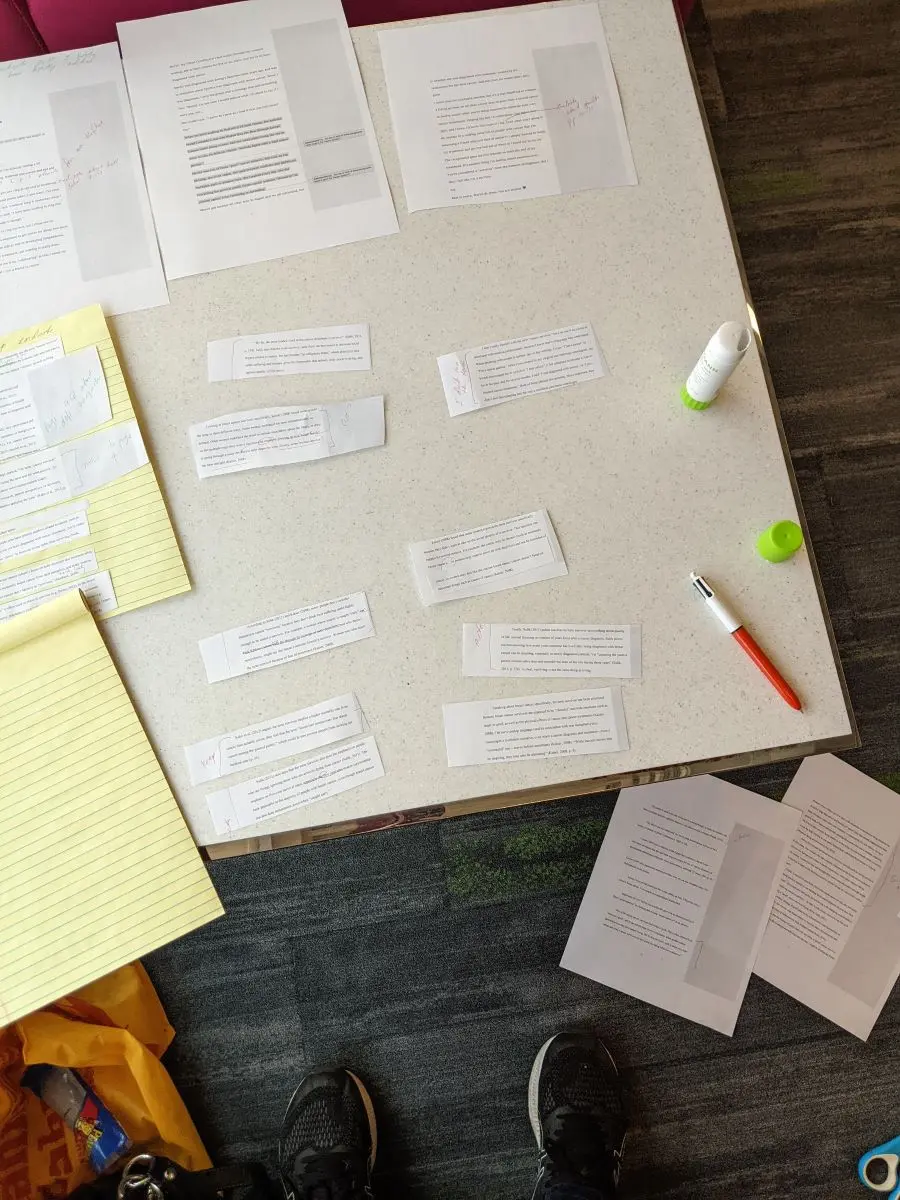
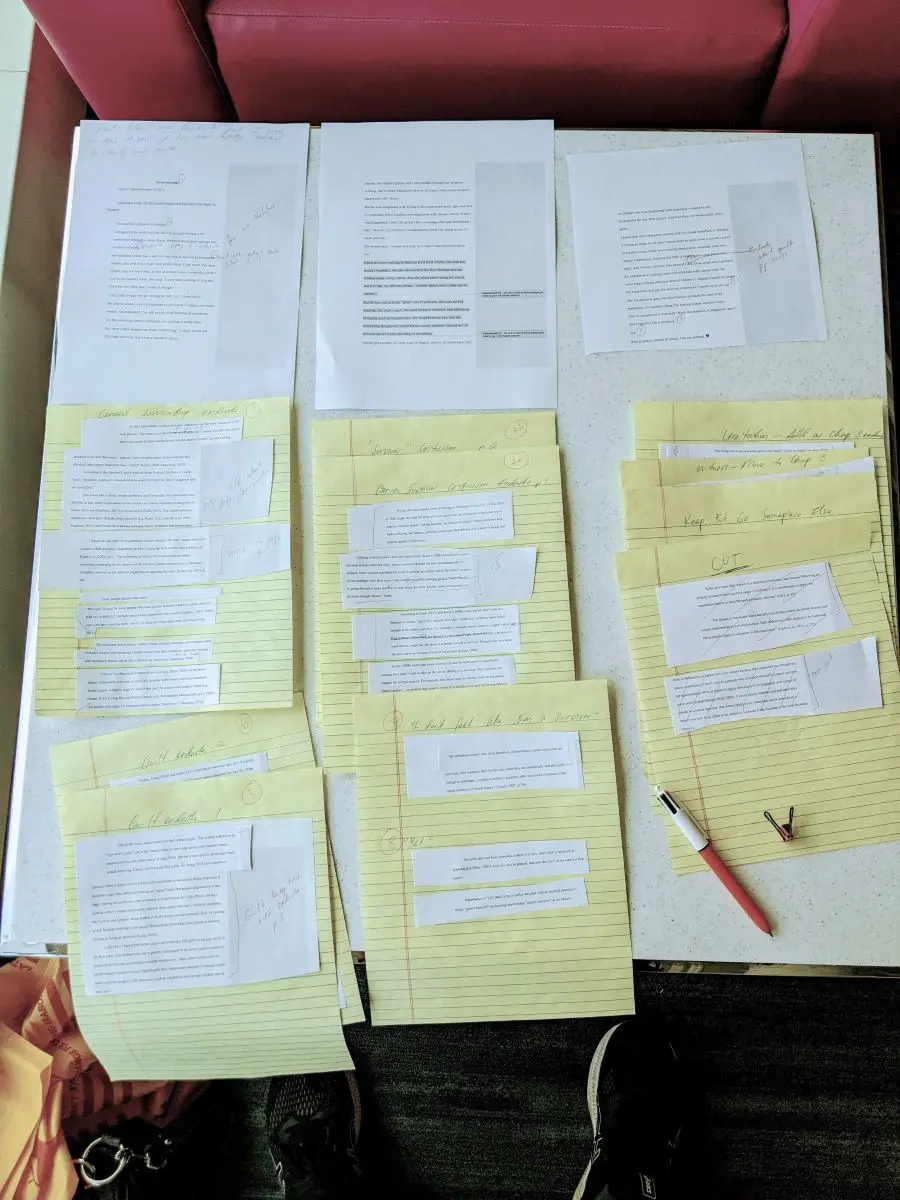
As I was deciding what to talk about in the Narrative Inquiry class, I came up with more and more connections between my creative identities and how I wrote using my researcher identity. “I am a _______, and I think _______, so I will _______.”
Writing About Sex, Writing About My Boob
There was one connection that truly surprised me.
Several years ago I took a class on writing sex scenes at the Loft Literary Center, Allie Wyss’s class “Awkward is my Superpower. (I’ve taken several classes with Allie and she’s a fantastic teacher!) Unexpectedly, this class helped me write about my body and my breast—a historically sexualized body part that became medicalized in the shadow of cancer.
Of course, in any sort academic or professional writing, “breast” would be the correct language to use. If quoting someone else, such as a participant, the word “boob” might be used. But a researcher who referred to “boobs” when discussing breast cancer (rightly) wouldn’t be taken seriously.
The problem? In my dissertation, I was the researcher and my breast cancer experience was the primary topic of research.
As a writer and a researcher and a cancer survivor, I had to decide when “boob” had more impact and meaning than “breast.”
In Allie’s class, we discussed the idea of being nude, as characters might be for the reader, or being naked, as characters would be for each other. I used that idea to help figure out when to cross that researcher/cancer survivor line.
But when I took that writing class, I was not thinking about academic writing at all. I just wanted to write better fiction! Who could have known that class would impact how I wrote my dissertation?
How Spinning and Photography Found Their Ways into my Dissertation
Shortly before my cancer diagnosis, I started learning to spin on a drop spindle. I did this because I’m a textile/fiber artist and knitter, and because I read the classic book Women’s Work: The First 20,000 Years by Elizabeth Wayland Barber. I wanted to get my hands onto a drop spindle to understand what Barber was referring to.
This spinning appeared in my dissertation work in the form of Dendro-Oncology (9:30). This woven piece of work answered the question “how can I view my cancer experience in the span of my life?” I definitely wasn’t expecting to use spinning in my dissertation when I started drop spindling, and I wasn’t trying to do anything academic when I read Barber’s book!
And of course, the darkroom I’d had built to avoid doing academic work became crucial to my dissertation. One chapter used hand printed black-and-white photographs as section breaks and headings instead of, well, headings. (Look at that! Breaking another rule of academic writing!)
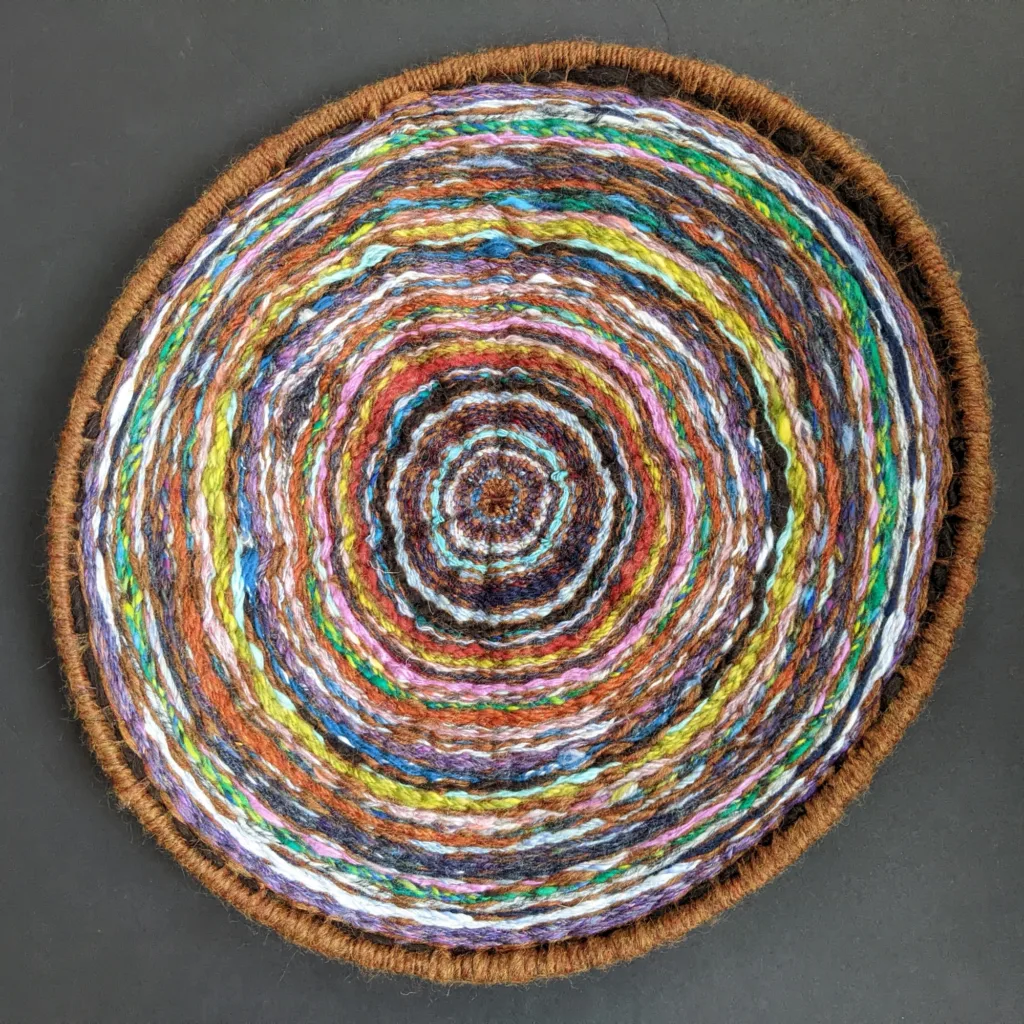
handspun yarn (wool, silk, unknown fibers), crochet cotton, wooden hoops
The Pros and Cons of It All
Becoming an arts-based researcher—and writing about my own breast cancer—meant bringing my whole self into my work (even down to my boobs!). I know this made my work stronger (or I wouldn’t have done it!), but there was a huge negative side effect.
I was so burnt out after my defense.
Now, that’s not an uncommon feeling for newly minted PhDs. And in my case, I’m sure the topic helped cause that burnout. I had spent so much time [reading thinking writing researching interpreting questioning analyzing considering creating drafting redrafting editing revising talking figuring making] about breast cancer, and I needed space away from it.
Stepping away from academic reading was easy. I recycled every printed draft copy of my dissertation and I tossed articles I hadn’t read and knew I’d never read. I shoved the rest of the articles and books in banker boxes (one was labeled “articles I say I’ll read but probably won’t” and I’ve never opened it). I immersed myself in chicklit and romance novels and I felt great about it.
But about art making, I just felt dead. It was something like a year before I even wanted to get back to art making of any sort and another six months or so before I felt like I could make anything.
But How About the Other Way Around?
I was honored to get the invite to talk to the Narrative Inquiry class, and I thought the talk itself went really well. The students asked great questions and I’ve connected with a few students since the talk. I left feeling really energized, and I certainly hope the students left feeling that way too.
But now, more than six months out from the talk, I’m still thinking of how these tiny actions I take—signing up for a writing class, reading a book about women’s work—shaped my researcher identity. And I’m also wondering how, in turn, my researcher identity shapes my artist identity.
- I say “mostly” because there are some researchers who try to gatekeep arts-based research. For example, one common statement is that you shouldn’t be allowed to “do” arts-based research unless you have an undergraduate major or minor in art. I think this argument is made in an attempt to “prove” arts-based research is “valid.” There seemed to be a concern that people would see arts-based research as “easy” and they’d make shitty art instead of writing a dissertation.
In reality, arts-based researchers often end up making two bodies of work, one written and one in their art form(s). And if people think arts-based research isn’t valid, I’m not sure gatekeeping arts-based research to a level of undergraduate education is the solution. Luckily, I think that gatekeeping has fallen by the wayside a bit.
(Note: I’m choosing not to publicly name the particular researcher I’m thinking about. But if you need a reference, message me and I’ll send it to you.) ↩︎
Leave a Reply