My brother built my darkroom in 2018–2019. When he was done with the bones of it, it was my job to make the room light tight. I figured I’d need a cheap caulk gun and a few tubes of caulk and I’d be done in an evening.
But it was incredibly difficult to make the darkroom, well, dark.
At first, I’d turn off the light and immediately see light. For example, there was a crack of light shining through the place where two walls met. It was a thick gap, so I found rope caulk and pressed it into place. Easy.
I turned out the lights again and found a large gap around a square pillar near the entrance. That one needed spray foam.
I’d turn out the lights, notice another gap, and block it. Fixed, fixed, fixed. This was easy.
Except it turned very difficult very quickly.
One day, the ceiling was bathed in light. That hadn’t happened before. It took some sleuthing to figure out that the lights were on the room next door. The ceiling joists running between the rooms created tunnels. I solved that issue—after checking with my brother to see if it was safe—by stuffing a lot of polyester quilt batting into the joists.
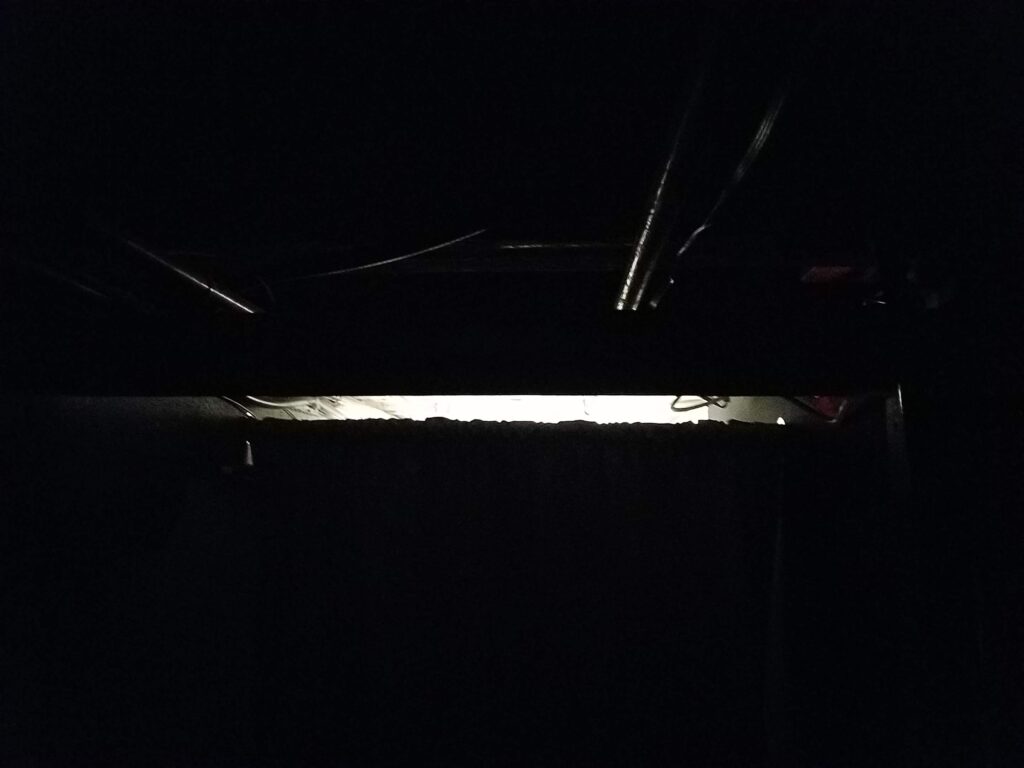
Still, even then, some light peeked through. So I used some old, heavy canvas to create fabric walls around the joists. (Years later, I find the canvas ugly, but I had it on hand and it’s working well enough, so it stays!)
Once that problem was solved, the light leaks become smaller but seemed more concentrated.
I’d sit in the dark for several minutes to let my eyes adjust. I’d peek around the room and suddenly a narrow beam of light would blind me. Lights on, I’d caulk the area and think I was finally done.
But I wasn’t done. Every single time I closed off one source of light, another one would appear.
One fine pinprick of light appeared above my sink. It was shining through the holes of my pegboard and was only visible from a few angles. I found a tiny hole in the wall.
Electrical strips and a CD/radio needed some gaffer tape.
I was probably being overly cautious.
But I was caught in this cycle of finding light, blocking it, and finding more. I realized that the large amounts of light—that rope-caulk large gap in the wall, the spray foam spot—hid the smaller pinpricks of lights.
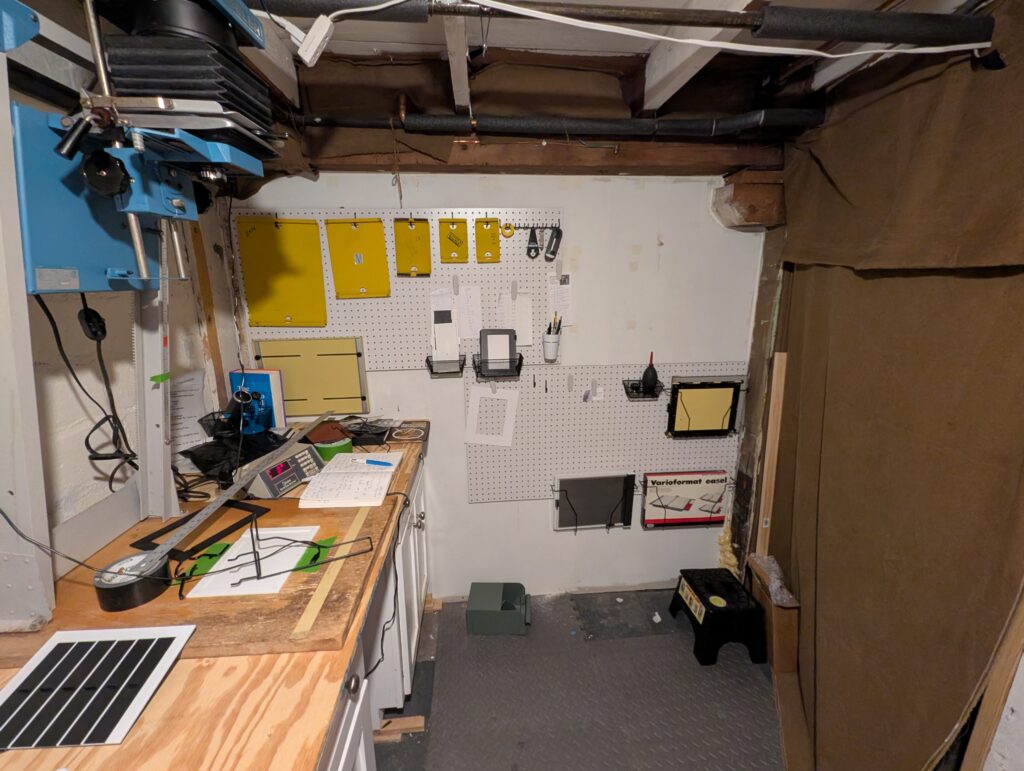
The darkroom came together seven years ago, but I’ve thought about this repeatedly since then. There’s a lesson in here about patience.1 There’s another about problem solving and using a variety of tools.2
But there’s more than that.
I keep thinking of two ideas. The first is that the light is where you find it… and you can find it everywhere. The second thought is that it all matters—not just the flood of light, but the trickle of light too.
These two ideas remind me of two other ideas. First, from Amanda Gorman’s poem, “The Hill We Climb”:
“There is always light,
if only we’re brave enough to see it.
If only we’re brave enough to be it.”—Amanda Gorman
Second, from Wendy MacNaughton and Courtney Martin’s “Focus: This Is Your Assignment” poster, which my friend Cynthia gave me when I was in my doctoral program:
“Get behind the camera. Look for that pinprick of light. Look for the truth. (Yes, it is a thing—it still exists.)”
—Wendy MacNaughton & Courtney Martin
Over the time, I’ve rolled these ideas around in my mind. They’ve become touchstones, although I’m not sure exactly for what.
I wish I had some grand unifying thought. A pithy quote.
But I don’t. These are simply ideas I’ve come back to repeatedly over the past several years in different contexts and time periods. And so I share this story of chasing light with you, in case it sparks some connections for you.
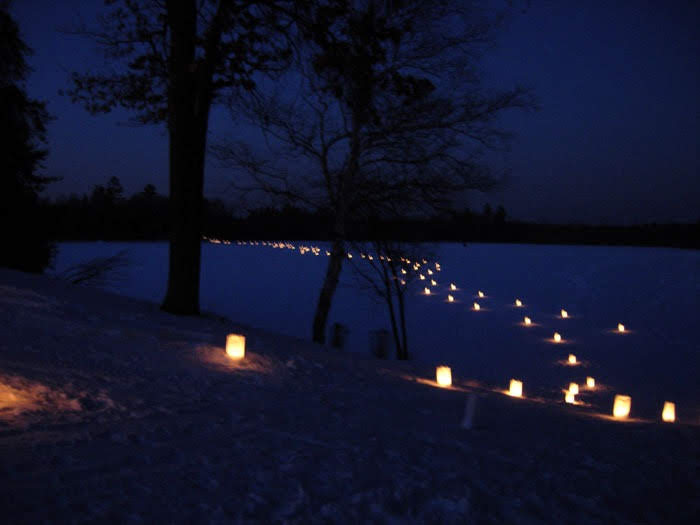
I went on this candlelight hike around the same time I was blocking out light in the darkroom. I love winter candlelight hikes, but friends who have never done one wonder how you can see. When it’s winter dark, a little light matters!
- When I thought I was finally done, I went in the darkroom to make my first print. I turned the ventilation fan on and realized that the air flow difference tugged on my canvas doorway, letting the tiniest amount of light in. Since it’s low and close to the ground, I left it. Still, I have considered adding magnets to the wall and to the canvas flap to keep it in place. (I probably won’t ever do that.) ↩︎
- Off the top of my head, I used caulk, rope caulk, foam backer rod, spray foam, polyester quilt batting, heavy canvas fabric, gaffer tape, electrical tape, and pipe insulation to help block light. Years later, when sump pump pipes were run through the room, I used black duct tape and an old bed sheet to help block light. It’s a good thing I’m not obsessed with the aesthetics of the room! ↩︎
Leave a Reply