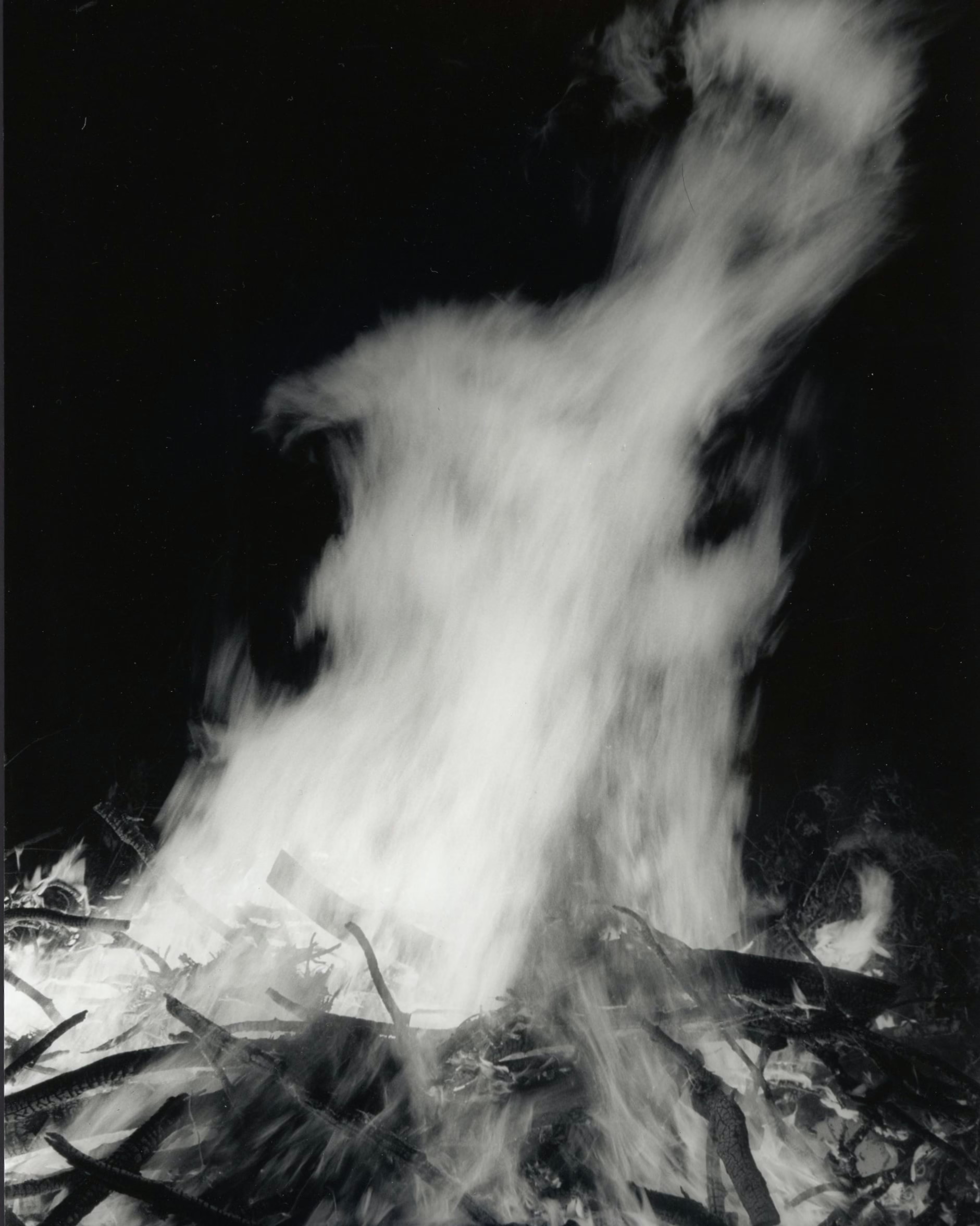
One of the reasons I love black-and-white photography is because of the decision making that comes into play; one of the frustrating things about black-and-white photography is the decision making that comes into play.
Last year I visited Pacem in Terris1 during their bonfire weekend. Usually visits to Pacem are a very solitary event, but the bonfire weekend is a bit different. Hermits can chat with other visitors while enjoying hot cocoa and cookies in the main building, and they can wander the trails on the property to see bonfires that the staff monitor. Visitors can also spend the whole weekend in quiet contemplation and enjoy the bonfires from their hermitages. (This year, the bonfire weekend is February 6–8th.)
I attended the first bonfire weekend in 2023 and went again last year. Last year’s bonfires were especially large because of debris left from a severe storms that went through the property in August 2024. Both times, I brought my camera.
Since the fires were so bright in 2025, it was fairly easy to handhold my camera. I developed the film like normal, and when I examined the negatives, I could see details such as ember trails and trees in the background.
But when it came to printing the negatives, I found that I could get texture in the fire and deep black shadows in the background or I could get blown out highlights in the fire but also show details in the background.
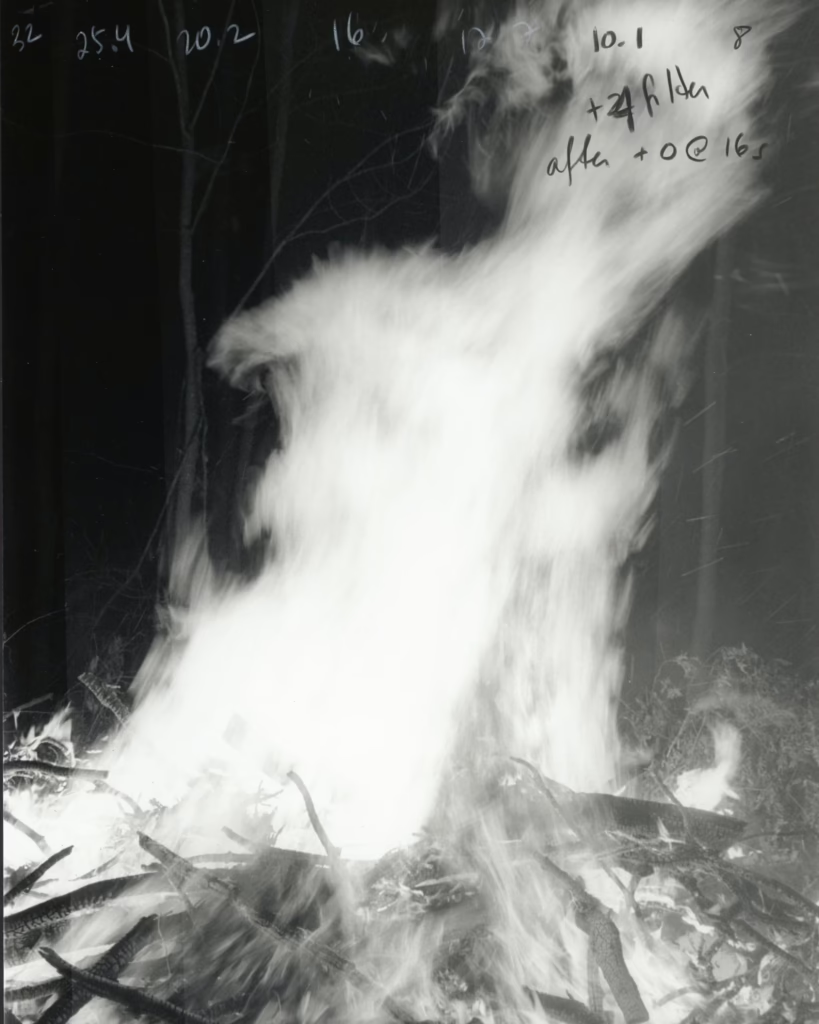
I had a very bright fire, and the highlights were blown out unless I burned them in with a very soft filter. But when I burned in the highlights, it muddied up the trees in the background. Then I used a hard filter to bring out rich blacks—those deep blacks helped add even more texture to the fire, but made the tree trunks nearly disappear into the background.
I tried different filter combinations. I also tried burning (ha ha ha) and dodging, but it still made for a muddy background. I suspect my inability to get the trees and the fire texture is a skill issue, but that’s OK.
In the end, I chose to lose the trees in favor of the texture in the fire.
The fire is the focal area, and the dark background keeps the focus on the fire. And perhaps more importantly, the texture brings depth to the fire. That depth is needed, because the photo isn’t in color. Without the soft 00 filters, you just see a blob of white, but with the texture a 00 filter brings, you see fire.
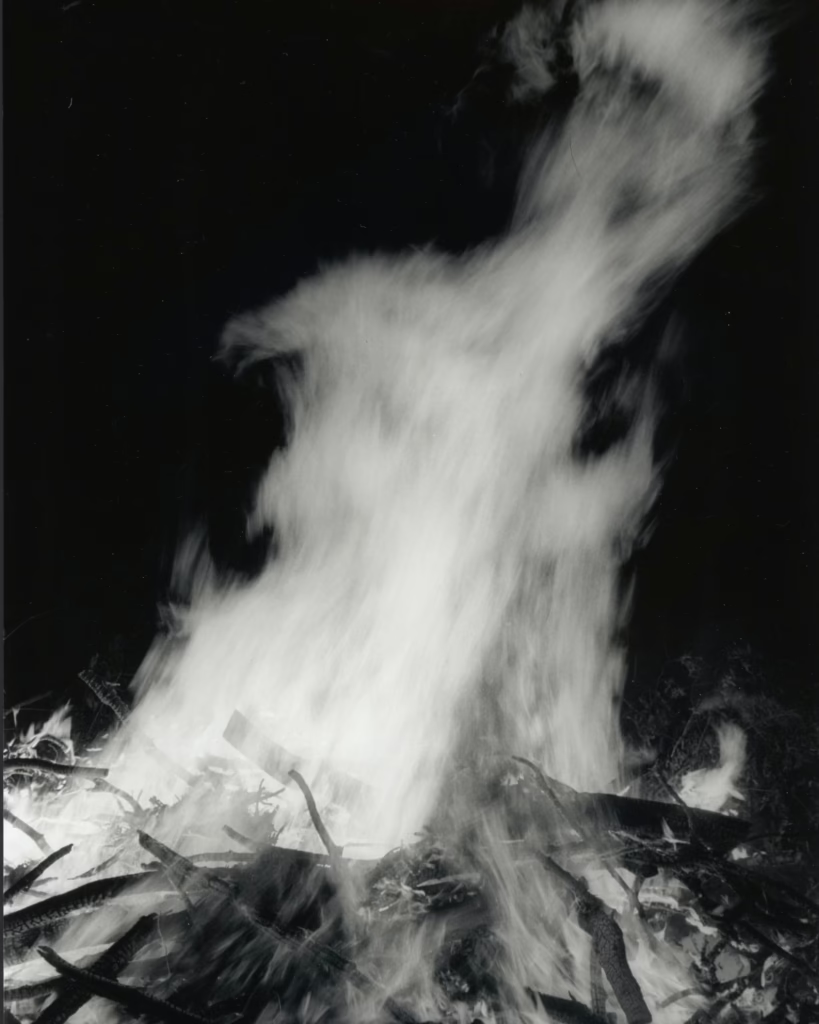
Even though I’m happy with this print, it’s interesting to consider what photos show and what they don’t. This photo isn’t what I saw in real life. It’s not even what’s on the negative. But it’s what I was able to print with the skills and resources I currently have.
I used this photo for one of the 209 Weeks postcards, and I also sent this photo to a mail-in art show in Estonia called “Fire of bonfires in the culture of peoples.”
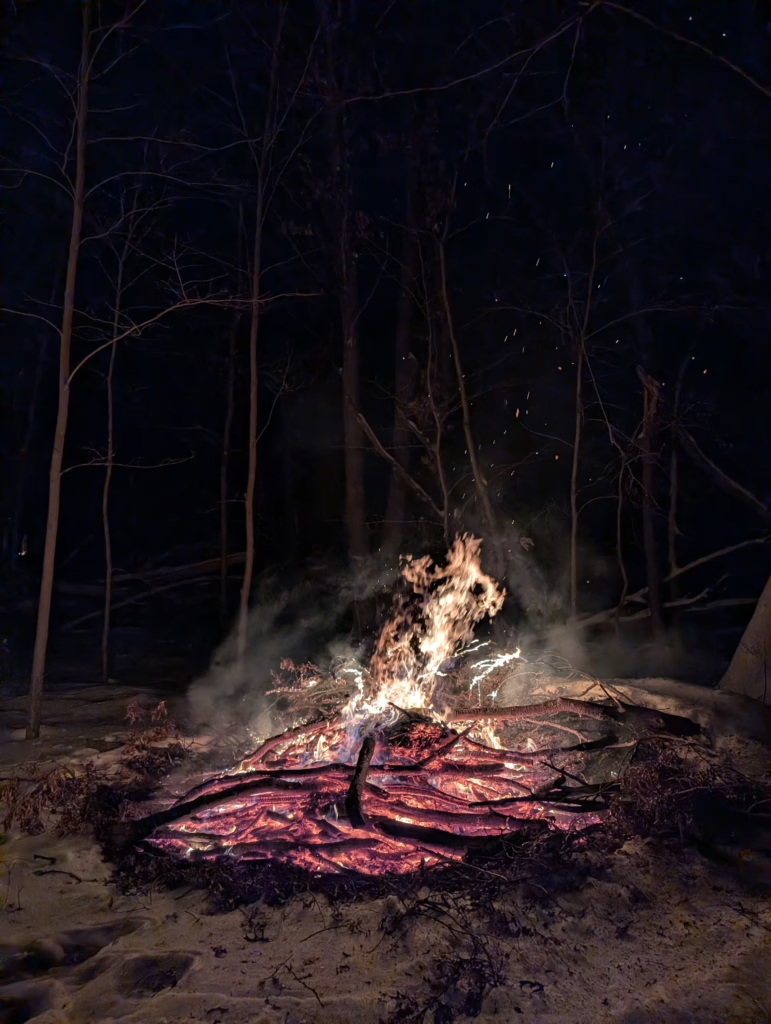
Finally, Pacem doesn’t have electricity, running water, or wifi.2 When I go to Pacem, I turn my phone off and leave it deep in the closet in the room. This visit, I briefly turned on my phone to take a few color photographs. This is my favorite one, because the fire looks like liquid. And I notice how different the fire looks with a much faster shutter speed. You can see lots of embers, but the fire doesn’t seem to roar the same way the film photos do.
This photograph was submitted to a photo contest held by the Center for Climate Literacy and I won the adult division. I got a lovely book in the mail as my prize. Definitely unexpected!
- Pacem in Terris is a Catholica hermitage retreat center (open to people of any, or no, faiths) in Isanti, Minnesota. I’ve visited Pacem several times, and it was a huge part of my post-cancer treatment healing; I wrote extensively about my first visit there in my dissertation. Every once in a while, when I’m very stressed out and nothing seems to be helping, my husband will ask me if “it’s Pacem time.” ↩︎
- I’m being a little dramatic. The main building does have bathrooms, showers, and electricity. There are also some hermitages in the main building for hermits who may need access to electricity for health reasons. Each small cluster of heritages has a really nice “spiffy biffy.” ↩︎