I defended my doctoral dissertation in January 2023. After spending many months reading, writing, editing, and making art under a time crunch (my knees ached for days after I spent Thanksgiving weekend crawling around on the floor basting a quilt), I consciously stepped away from art making for three months to recuperate. Three months turned into something much longer, and even when I felt ready, I had a difficult time returning to my studio practice. When I went to make my first postcard for the 209 Weeks project, I hadn’t been in the darkroom for over a year.
209 Weeks brought me back to the darkroom.
I am a sucker for “Here’s what I learned after doing [X] for [amount of time]” posts. In that spirit—
What I’ve Learned from One Year of Consistent Darkroom Work
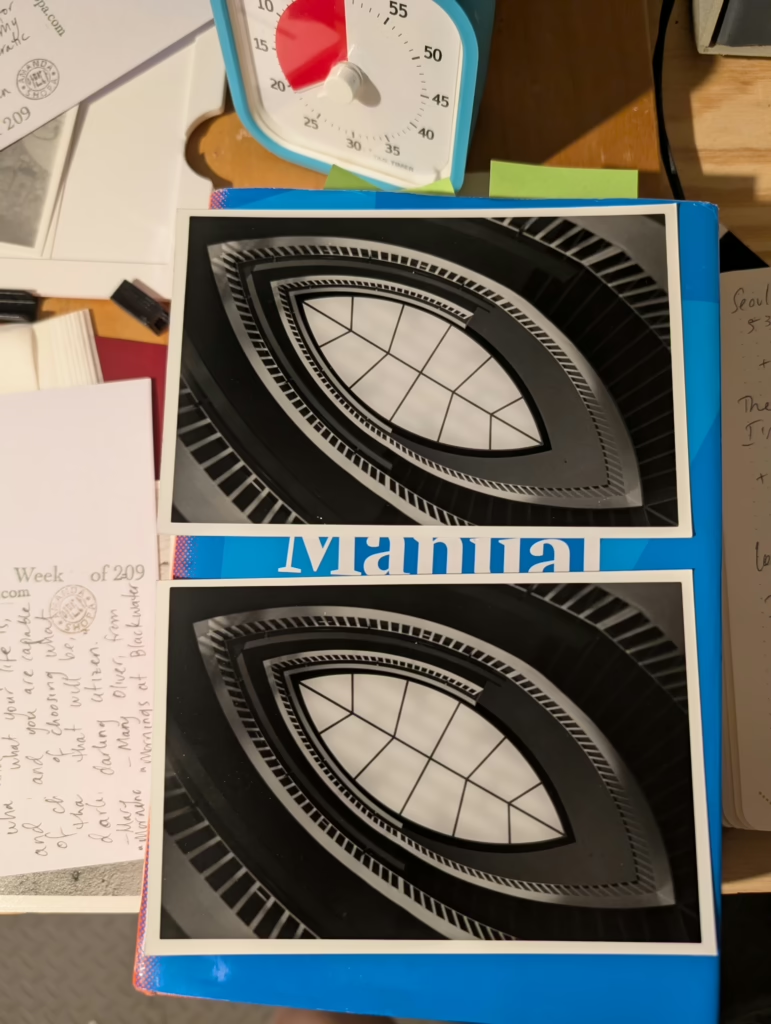
1) A darkroom can be too bright. My darkroom is too bright. It took me a long time to realize that many of my earlier postcards appear too dark because I evaluated them in a very small room under a 75-watt bulb. I’ve learned I need to expose for 1/3 stop less than what looks good in the darkroom. If I’m not working on a time crunch, I’ll even bring a test print upstairs in natural light to evaluate it after it’s dry.
2) Overcoming inertia can be hard… I work in fits and bursts, meaning sometimes I get in a groove and print several weeks of postcards at once. This is good because it helps me build up a buffer of postcards for really busy weeks; this is bad because sometimes it can be difficult to overcome inertia.
3) …but it’s worth it. Although overcoming inertia can be hard, when I do get in the darkroom, it’s (almost) always a good time. I can only think of one, maybe two, printing sessions in the last year that left me feeling worst than when I entered the darkroom.
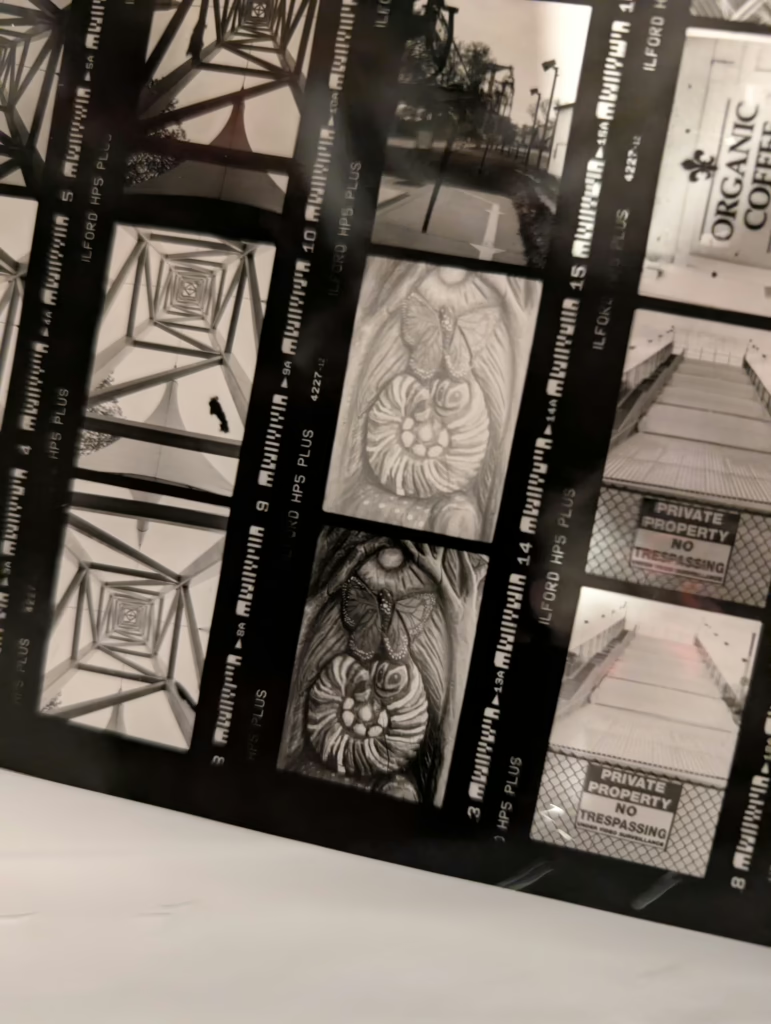
4) Standardization costs time upfront but saves it later. Getting in the darkroom consistently has made me standardize some process. For example, I spent some time making contact print test sheets with different types of film and now I know the exact enlarger height, f/stop, filter, and exposure time I need to make contact sheets with my typical films.
When I was only getting in the darkroom sporadically, perfecting contact sheets didn’t seem worth it—I wanted to print photos not contact sheets. But now I’m saving time. And more importantly, I can evaluate contact sheets more accurately and easily.
5) I need to keep better notes. I have a tiny notebook that I keep notes in while shooting film, but I think the notes could be more… robust. For example, I number my film rolls, but somehow I developed three #28 rolls.
6) Time can make thing better… I usually wait until I have several rolls of film to process them. I wait even longer to make contact sheets. By the time I make those contact sheets, I’ve forgotten what’s on the film, which makes for a fun element.
7) …or worse. But waiting so long to process the film and make a contact sheet can also cause issues. For example, I found one roll of film with dusty artifacts on the film, and I don’t know if the problem was with the roll of film, the camera, or the processing. I also had issues with focusing several summers ago, which I only found out last month. I think I needed progressive lenses, but it was so long ago, I’m not sure what the problem was.
8) My habits are old. My cropping is very tight. I love when the subject fills the frame. I know I learned to do this when I was a teenager, and it worked well when most of my photos were 4 by 6 prints from Walgreens. But now that I’m printing more, I’m directly seeing how limited it can be when I’m printing 5 by 7s, 8 by 10s, or any other sizes. The ratio doesn’t work.
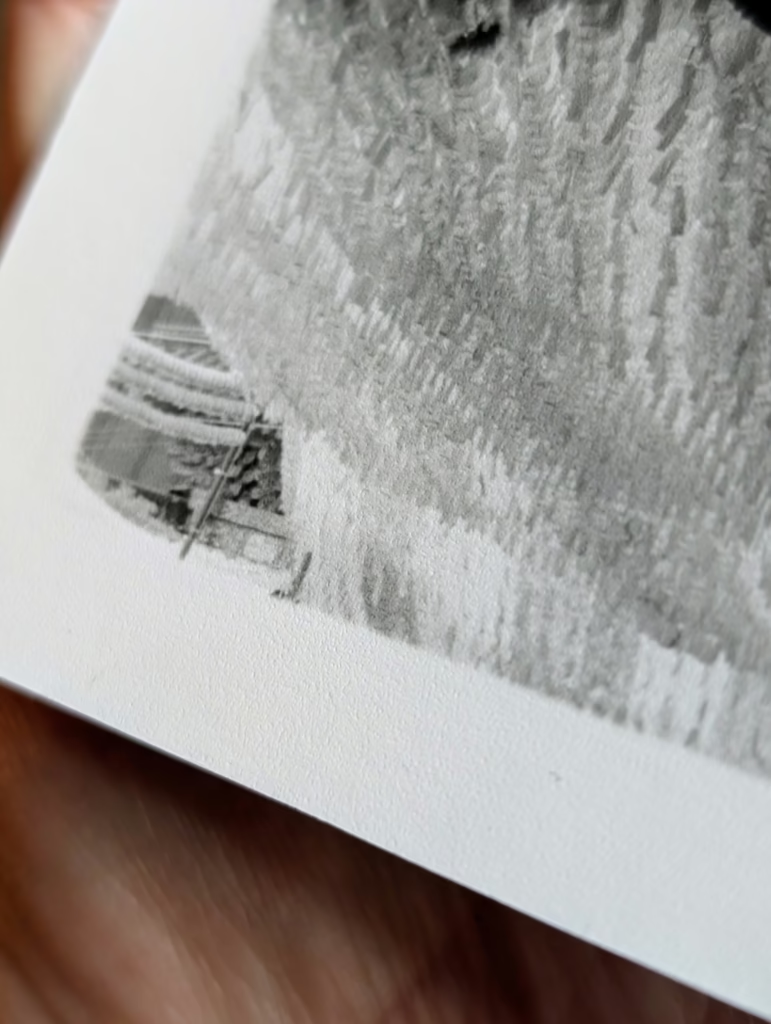
9) My eyes are old too. My depth of field is very shallow. I like backgrounds that sink into the back of the photo. But this is limiting because I absolutely have to nail focus. My cameras and lenses are manually focused, nually focusing and I wear progressive lenses. It may be time to let go of f/1.4. (Sobs in Zeiss glass.)
10) Quantity… Since I am making so many prints (at least one a week, every week!), I have sent postcards even when I’m unhappy with them. It’s not that I don’t care about my photos; it’s that I truly don’t have time to act on perfectionism. There’s a lot of freedom in this.
11) …versus quality. Printing so many images has also shown me that some photos are worth printing even when they’re not perfect. The focus might be soft, the composition might be limited, but the photo itself might bring me so much joy it’s worth printing.
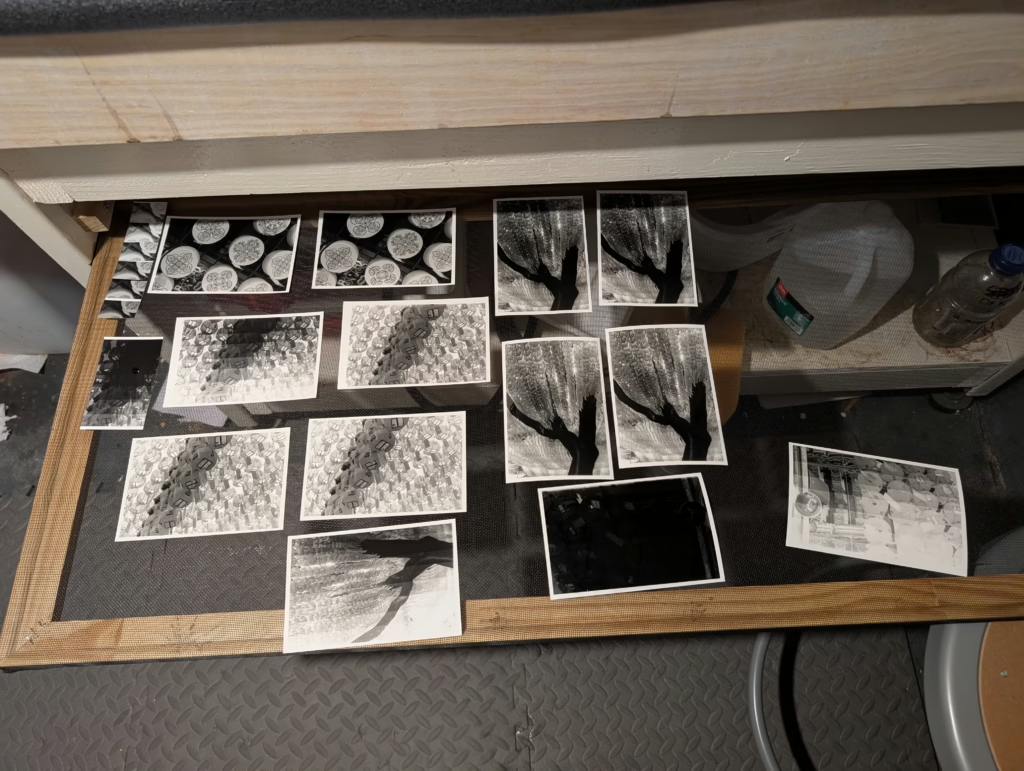
12) Intuition can be developed. Printing is becoming more intuitive. More often now, I can guess at a really good split grade filter setting after making only one test strip print. That feels pretty cool!1
13) I underestimated the time commitment. I found it difficult to get into my fiber arts/textiles/sewing studio this year because I was spending so much time in the darkroom. (I’m not sure how to fix this, but I know I am missing fiber/textiles/sewing.)
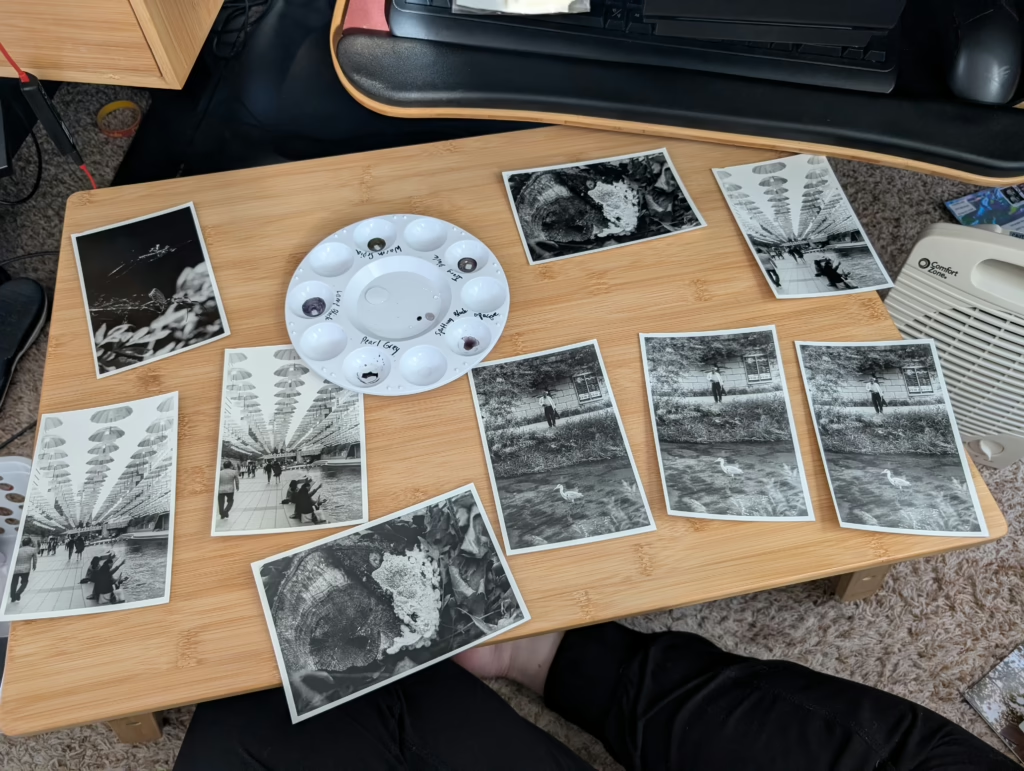
14) Administrative tasks so long. I definitely underestimated how long the administrative side of the project would take. Scanning, uploading, captioning, and posting postcards took much longer than I expected (so I was months behind on posting the photos). Even though I enjoy writing, blogging was harder than I expected (which meant I ended the year with a to-do list of blog posts rather than actual blog posts). Sending out a monthly newsletter to my mailing list felt overwhelming (and I just… didn’t do it).
But I care about documenting and sharing this work. So I’ll keep at it. (And if I’ve learned anything from this year, it’s that things that feel hard in January won’t necessarily feel hard in December. Fingers crossed!)
15) I didn’t quit. When I came up with the idea for the postcard project, I knew I was committing to a big project. But I’ve kept up a morning pages journal since September 2017, and I’ve kept up a daily walking practice since March 2020. So I figured a weekly postcard was doable. And if I got behind by a day or two, that was fine. I’d just come back to it.
But late in the year, I got really behind on the postcards. Not a few days or even a week, but several weeks behind. I had over-committed myself to things, I was feeling physically worn out, and I was really stressed out.
A friend kindly suggested I consider what I needed to do to feel better and if I needed to adhere to my self-created project rules. I thought about it. Could I send a postcard every other week? Once a month? Incorporate a digital aspect?
None of those things felt right.
What I could do was go print one postcard. That would make me one week closer to my goal.
So I went into the darkroom.
I didn’t quit.
- If you’ve read any books about creativity, or the wildly popular book Atomic Habits, you may be familiar with the story about a pottery professor who did an experiment with a class. Half the class was graded on quantity: Their final grade was determined by the weight of the pots they had created throughout the semester. The other half of the class was graded on quality: They only had to turn in one perfect pot to earn an A. At the end of the semester, the professor found the group that had created the most pots also had the best quality pots. Quality came out of quantity. So although I didn’t expect it, I’m not surprised that intuition came along with making (including making mistakes!). ↩︎